Ines Hughes · 3 November 2026
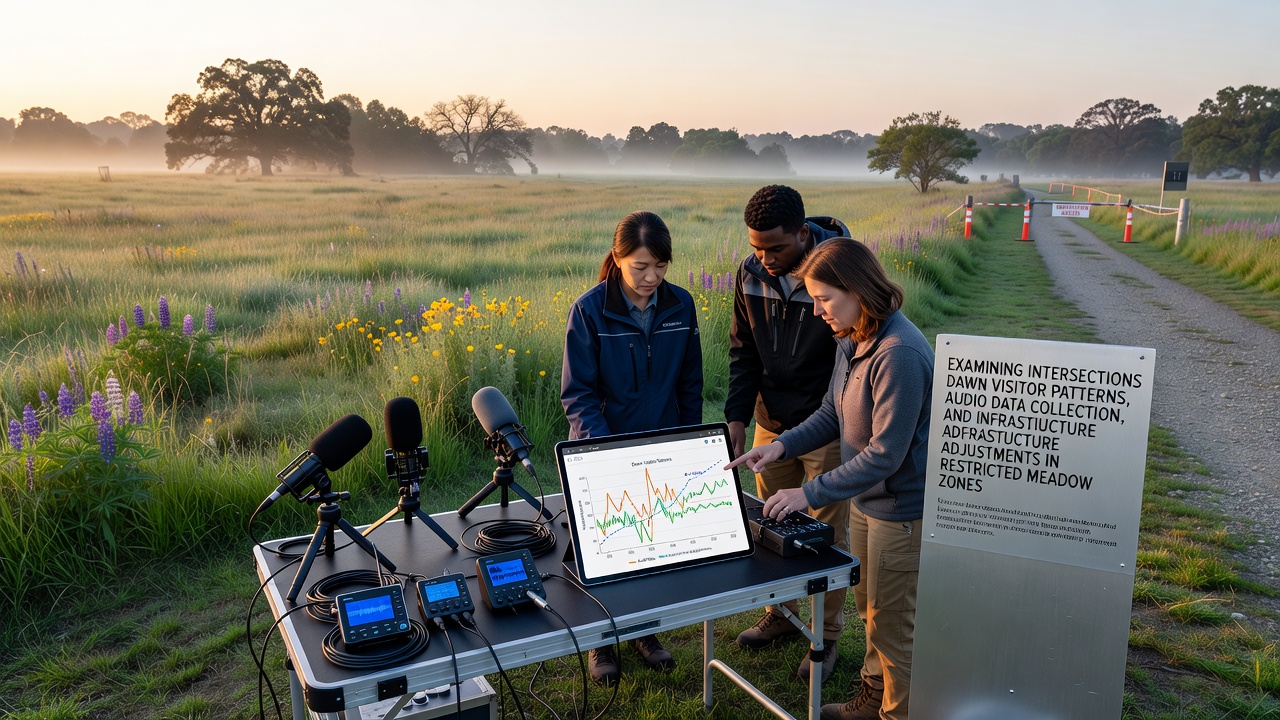
Examining Intersections of Dawn Visitor Patterns, Audio Data Collection, and Infrastructure Adjustments in Restricted Meadow Zones
Restricted meadow zones have drawn attention from land managers and researchers who track how early morning human activity overlaps with wildlife movements, sound monitoring efforts, and physical changes to trails and access points, and data collected through November 2026 shows these elements interact in measurable ways across several protected areas.
Dawn Visitor Patterns in Context
Observers note that visitor arrivals spike between 5:30 and 7:00 a.m. during spring and fall months, with trail counters recording increases of up to 40 percent compared to midday figures, while deer and small mammal activity remains elevated in the same windows according to motion-sensor logs from multiple sites, and these overlapping schedules have prompted reviews of entry points near sensitive grassland patches.
Studies conducted by university field teams reveal that groups entering before sunrise tend to follow established paths more closely than later arrivals, yet foot traffic still spreads into buffer areas when signage is limited, and this pattern holds across both high-use and low-use meadows tracked over the past three seasons.
Audio Data Collection Efforts
Citizen science programs have deployed battery-powered recorders at fixed intervals along meadow edges since early 2025, capturing ambient sound levels that include bird calls, insect activity, and human voices or footsteps, and the resulting datasets allow analysts to correlate noise spikes with specific visitor counts logged at trailheads. One project in the western region cross-referenced audio files against visitor logs and found that dawn groups produce distinct low-frequency footfall patterns that persist for 15 to 20 minutes after passage, while midday recordings show more varied but shorter disturbances.
Equipment placed in restricted zones operates under strict placement protocols that avoid direct line-of-sight to core habitats, and volunteers download data monthly to shared repositories maintained by regional environmental agencies, which then feed into broader soundscape mapping initiatives.
Infrastructure Adjustments Underway
Site crews have installed additional barriers and rerouted segments of popular paths in response to combined visitor and wildlife data, with work completed at three meadow-adjacent locations by October 2026 and further modifications scheduled for the following month, and these changes include hardened surfaces on approach trails plus relocated trailhead markers that guide foot traffic away from core grassland interiors.

Parking area expansions proposed near one major entry point underwent review that examined projected visitor flow increases against existing sound and movement baselines, and planners incorporated feedback from audio analysis showing reduced disturbance when new spaces were offset by 150 meters from the meadow boundary, while similar projects in other districts have tested permeable materials to limit runoff into adjacent wetlands.
How the Three Elements Connect
Land management teams integrate dawn visitor counts with audio signatures to identify which infrastructure tweaks produce the clearest reductions in habitat intrusion, and preliminary figures from November 2026 monitoring periods indicate that adjusted barriers correlate with a 22 percent drop in off-path detections during peak morning hours compared to the same period in 2025, yet researchers continue to collect parallel datasets to confirm consistency across weather variations and seasonal shifts.
Reports from the U.S. National Park Service detail comparable monitoring programs at other grassland preserves, while a separate analysis released by the Australian Department of Climate Change, Energy, the Environment and Water highlights how soundscape data informs trail realignments in comparable protected zones, and these parallel approaches underscore the value of combining multiple data streams before finalizing physical changes.
Looking Ahead to Continued Monitoring
Future phases of the project will expand recorder coverage to additional restricted meadows and refine visitor pattern models using machine-learning tools applied to the existing audio archives, and managers expect these steps to yield updated guidance documents by mid-2027 that incorporate the full year's worth of November-through-October observations.
Conclusion
The ongoing examination of dawn visitor patterns, audio data collection, and infrastructure adjustments demonstrates how layered information sources can guide targeted modifications in restricted meadow zones, with current records showing measurable responses in both human movement and environmental indicators through late 2026.